Epsom Salt for Plants – GreenKheti Guide
Everything you need to know about using Epsom Salt (Magnesium Sulfate) for healthier, greener, and more productive plants.
Introduction
Epsom Salt (Magnesium Sulfate Heptahydrate) is a naturally occurring mineral that plays a vital role in the health and growth of plants. It is especially valued in gardening for its ability to provide magnesium and sulfur, two essential nutrients often lacking in soil.
Magnesium is crucial for photosynthesis, helping in chlorophyll production, giving plants their rich green color and supporting energy production. Sulfur contributes to protein synthesis, enzyme function, and overall plant metabolism.
Using Epsom Salt in your garden can lead to:
- Healthier, greener leaves with enhanced photosynthesis.
- Stronger root systems and better nutrient absorption.
- Improved flowering and fruiting in vegetables, fruits, and ornamental plants.
- Reduction in nutrient deficiencies, particularly magnesium-related yellowing of leaves.
At GreenKheti, our garden-grade Epsom Salt is pure and high-quality, making it safe and effective for gardens, potted plants, lawns, and ornamental plants. Whether you are a hobbyist gardener or a professional grower, Epsom Salt is a simple yet powerful addition to your plant care routine.
What Is Epsom Salt?
Epsom Salt is chemically known as Magnesium Sulfate Heptahydrate (MgSO₄·7H₂O). It naturally occurs as colorless crystals or a white powder that easily dissolves in water, making it perfect for soil or foliar application.
Epsom Salt Formula
The chemical formula of Epsom Salt is MgSO₄·7H₂O. It contains magnesium (Mg) and sulfur (S), which are essential nutrients for plant growth. Its water-soluble nature allows quick absorption by plants, making it ideal for soil or foliar application.
The two key nutrients in Epsom Salt provide the following benefits:
Magnesium (Mg)
- Essential for chlorophyll formation, allowing plants to capture sunlight for photosynthesis.
- Supports enzyme activation for energy transfer within the plant.
- Enhances uptake of key nutrients like nitrogen and phosphorus, improving overall plant growth.
Sulfur (S)
- Promotes root development and strong seedling growth.
- Assists in amino acid and protein production.
- Strengthens plant resistance to disease and stress.
Unlike synthetic fertilizers, Epsom Salt does not alter soil pH, making it ideal for both acidic and alkaline soils. It can be applied to a wide range of plants, including flowering plants, vegetables, fruits, and lawns. Regular use can lead to lush foliage, vibrant blooms, and higher crop yields.
Additional Tips:
- Epsom Salt is water-soluble, which allows plants to absorb nutrients quickly.
- Combining Epsom Salt with other organic fertilizers can improve nutrient balance without harming soil health.
- Ideal for correcting magnesium deficiencies in soil, especially in sandy or nutrient-poor areas.
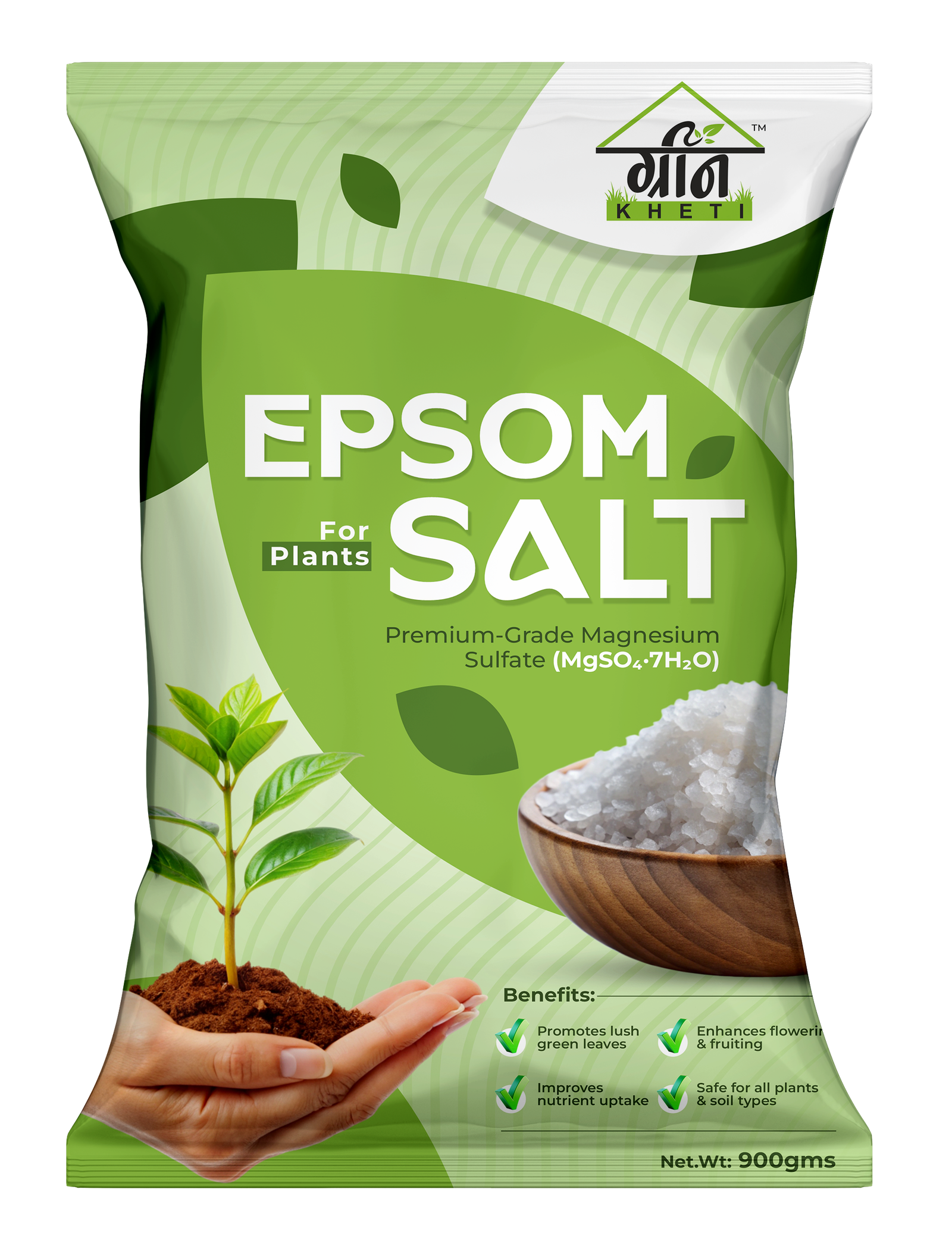
Front Side
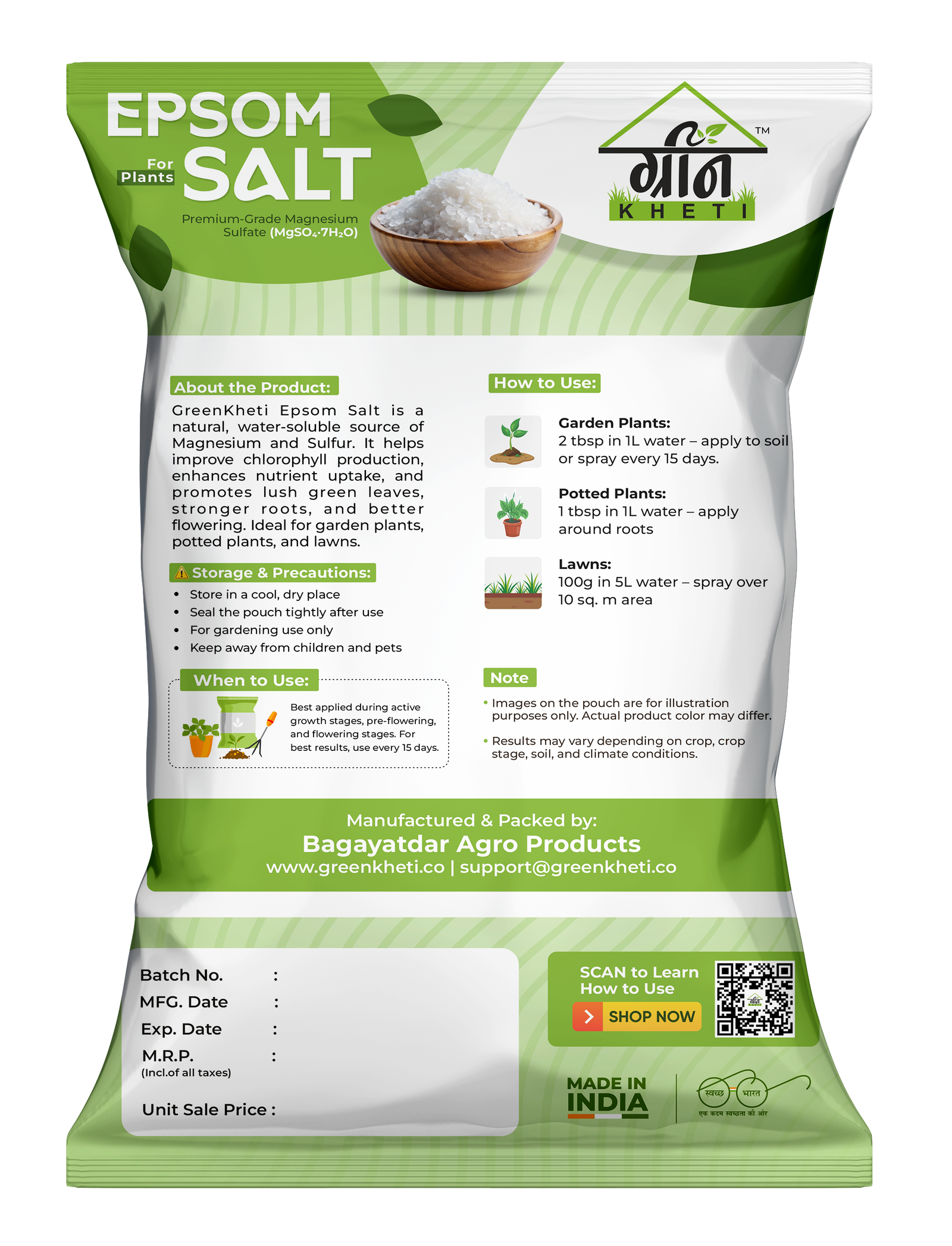
Back Side
Benefits of Epsom Salt for Plants
- Boosts chlorophyll production for greener leaves.
- Improves nutrient absorption of nitrogen and phosphorus.
- Encourages flowering and fruiting in roses, tomatoes, and peppers.
- Strengthens root systems and seed germination.
- Reduces yellowing leaves caused by magnesium deficiency.
How to Use Epsom Salt
Easy steps for using Epsom salt in gardens, pots, and lawns. Both spoon and gram measures are given.
Garden Plants — Soil & Leaf Spray
| Step | What to Do |
|---|---|
| 1. Measure | Mix 2 tablespoons (30 g) of Epsom salt in 1 litre of water. |
| 2. Mix | Stir until the salt is fully dissolved. |
| 3a. Soil use | Pour the solution around the base of plants (not directly on the stem). |
| 3b. Spray use | Put the solution in a spray bottle. Spray both sides of leaves in the morning or evening. |
| 4. Repeat | Use every 15 days when plants are growing or flowering. |
| 5. Aftercare | If soil is very dry, give a little water after applying. Use leftover mix within 2 days. |
Garden Tips
- Spray in cool hours (morning/evening) to avoid leaf burn.
- Try on one plant first if unsure.
- Do not use too often; stick to the schedule.
Potted Plants — Roots & Soil
| Step | What to Do |
|---|---|
| 1. Measure | Mix 1 tablespoon (15 g) of Epsom salt in 1 litre of water. |
| 2. Mix | Stir until dissolved. |
| 3. Apply | Pour around the roots in the pot. You can also lightly spray the leaves. |
| 4. Repeat | Every 15 days for most plants. For small/sensitive plants, use every 3–4 weeks. |
| 5. Care | Do not overwater after use. Make sure pots drain well. |
Potted Tips
- Use less solution for small pots; spread evenly.
- Good drainage is important to avoid salt buildup.
Lawns — Large Area Use
| Step | What to Do |
|---|---|
| 1. Measure | Mix 100 g of Epsom salt in 5 litres of water. Covers about 10 m². |
| 2. Mix | Stir until dissolved. Fill a sprayer or watering can. |
| 3. Apply | Spray or water evenly across the lawn. Walk in a grid to cover all spots. |
| 4. Repeat | Every 4–6 weeks in growing season, or 2 times (spring & mid-summer) for green-up. |
| 5. Aftercare | If the lawn is dry, water lightly after applying. |
Lawn Tips
- Do not overuse — too much can burn grass.
- Avoid use on dry, stressed lawns. Water first, then apply.
When to Use Epsom Salt
- When plants show yellowing leaves due to magnesium deficiency.
- During flowering stage to boost blooms.
- When fruiting plants like tomatoes and peppers need extra nutrition.
- For lawns, apply in early spring and mid-summer for greener grass.
Storage
- Keep Epsom Salt in a cool, dry place away from moisture.
- Seal the container tightly after each use.
- Store away from children and pets.
- Do not mix with other chemicals or fertilizers.
Precautions & Safety Tips
- Use gloves when handling large quantities to avoid skin irritation.
- Do not ingest – garden-grade Epsom Salt is for plants only.
- Avoid overuse to prevent nutrient imbalance in soil.
- Wash hands after application.
Application Tips
- Apply early morning or late evening to avoid leaf burn.
- Water plants before applying to improve absorption.
- Use regularly but avoid overuse to prevent nutrient imbalance.
- Best suited for roses, tomatoes, citrus, peppers, and lawns.
Fun Facts / History
- Epsom Salt was first discovered in Epsom, England — hence the name.
- It has been used in gardening for centuries to improve plant growth.
- Natural, non-toxic, and safe for plants and the environment.
DIY Gardening Recipes & Mixes
1. Tomato Booster Mix
Recipe: Dissolve 1 tsp of Epsom Salt in 1 liter of water. Water your tomato plants every 2 weeks.
Why Epsom Salt: Magnesium boosts chlorophyll production, giving tomatoes greener leaves and stronger stems. Sulfur aids in protein synthesis, helping flowers develop into fruits.
For more tips on growing tomatoes and vegetables successfully, check out our Growing Vegetables at Home: 10 Powerful Tips for Beginners guide.
Common Mistakes:
- Overusing can lead to nutrient imbalance.
- Avoid applying during very hot hours to prevent leaf burn.
- Don’t mix with high-salt fertilizers; it can stress plants.
2. Rose Flowering Mix
Recipe: Sprinkle 1 tsp of Epsom Salt around the base of each rose bush every 2 weeks. For enhanced results, you can also use our GreenKheti Flower Booster.
Recipe: Sprinkle 1 tsp of Epsom Salt around the base of each rose bush every 2 weeks.
Why Epsom Salt: Encourages vibrant blooms and stronger stems by providing essential magnesium. Sulfur enhances nutrient uptake for healthier flowers.
Common Mistakes:
- Avoid piling Epsom Salt directly on roots; lightly mix with soil.
- Don’t skip watering after application—helps salts dissolve and absorb efficiently.
3. Potted Plant Mix
Recipe: Add 2 tsp of Epsom Salt per 1 kg of potting soil before planting, or dissolve 1 tsp per liter of water for foliar application.
Why Epsom Salt: Strengthens roots and improves nutrient absorption in confined soil environments. Ideal for vegetables, flowering plants, and houseplants.
Common Mistakes:
- Over-fertilizing small pots can damage roots.
- Ensure even mixing to prevent “hot spots” of high salt concentration.
4. Lawn Green-Up Mix
Recipe: Dissolve 30–40 g of Epsom Salt per m² in water and spray evenly over your lawn. Repeat every 4–6 weeks during the growing season.
Why Epsom Salt: Magnesium helps grass produce lush green blades and improves overall growth. Sulfur helps with nitrogen utilization for healthier turf.
Common Mistakes:
- Avoid applying on frozen or dry soil.
- Do not exceed recommended dosage; too much salt can burn grass.
5. Fruit Tree Booster
Recipe: Mix 1–2 tbsp of Epsom Salt in 10 liters of water. Water around the base of fruit trees monthly during flowering and early fruiting stages.
Why Epsom Salt: Promotes flower-to-fruit conversion and increases yield. Magnesium helps in nutrient transport, improving fruit size and sweetness.
Common Mistakes:
- Avoid contact with leaves in direct sunlight.
- Apply only during active growth; dormant trees do not absorb nutrients effectively.
Environmental Benefits
- Natural, biodegradable, and eco-friendly.
- Reduces the need for chemical fertilizers.
- Improves soil health and plant nutrient absorption naturally.
Frequently Asked Questions (FAQs)
A: It is suitable for most flowering and fruiting plants, including tomatoes, roses, peppers, and citrus. Avoid using on acid-loving plants without testing first.
A: Typically every 2-4 weeks, depending on plant needs and soil conditions.
A: Garden-grade Epsom Salt is non-toxic, but avoid ingestion and keep it out of reach of children and pets.
A: It can be mixed with most fertilizers, but avoid strong chemical reactions by checking compatibility first.
A: You can buy GreenKheti Epsom Salt directly from our online store. Buy here.
Conclusion
Epsom Salt is a simple, affordable, and effective way to boost plant health, improve flowering, and enhance overall growth in your garden. By using it correctly and in moderation, you can enjoy healthier plants and higher yields. Whether you are a beginner or an experienced gardener, Epsom Salt can be a reliable addition to your plant care routine.
Ready to try it out? Order GreenKheti Epsom Salt today and give your plants the care they deserve!
Buy GreenKheti Epsom Salt
Available online at your favorite stores.



Disclaimer
The information provided in this guide is for educational purposes only. While Epsom salt is widely used in gardening, results may vary depending on soil type, climate, and plant species. Always follow recommended usage guidelines and avoid excessive application. GreenKheti is not responsible for misuse or overuse of the product. For serious plant health issues, consult with a certified agronomist or gardening expert.